Today, the Bruce Springsteen Archives & Center for American Music (BSACAM) at Monmouth University preserves the legacy of Bruce Springsteen and celebrates the richness of American music. Our dual mission combines two complementary goals: the Archives serve as the official repository for materials related to Bruce Springsteen and the E Street Band, while the Center for American Music explores the broader story of American music through exhibitions, concerts, and educational programs.
But how did it all begin?
The roots of the BSACAM trace back to 2001, when Springsteen fans organized a campaign to collect and preserve historic articles, photographs, and memorabilia related to Bruce’s career. Concerned that early coverage was disappearing, fans built what became known as The Bruce Springsteen Special Collection. Their goal was to make this material accessible not only to fellow fans but also to scholars and students studying how Springsteen’s art reflects American culture, politics, and identity.
From Asbury Park to Monmouth University
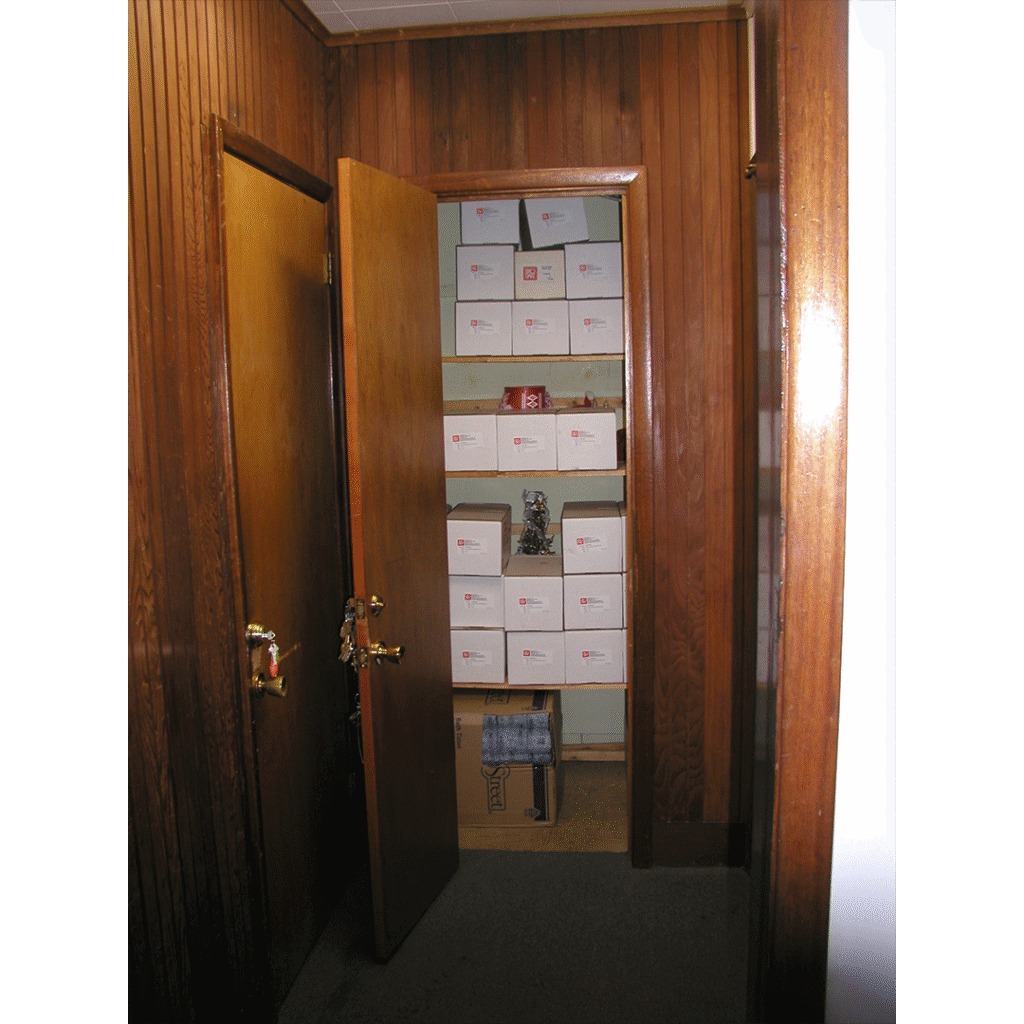
The fan-led collection found its first home in a closet at the Asbury Park Public Library—fitting, given Springsteen’s deep roots in the city’s legendary music scene. But as the collection grew, space became an issue. “I’ll never forget the first time I saw it,” recalled Keith Wells, husband of founding archivist Sandy Wells. “It started as two boxes in a coat closet… then grew into a caged area in the basement, and finally into rented storage. That was the start of the Collection.”
Eileen Chapman, now Director of Public Programs for the BSACAM but then with Monmouth University’s Center for the Arts, saw both the logistical challenges and the potential of the Special Collection. She contacted the stewards of the Collection to suggest Monmouth as a new home—still close to Springsteen’s roots, and rich in academic resources. Though the Friends initially hesitated, the Collection soon outgrew its library setting, and Monmouth emerged as the logical destination.
Finding a Permanent Home
Negotiations took time, but in 2011, the collection moved into a small house on Monmouth’s campus. Volunteers spent the summer relocating thousands of items. The newly established Archive quickly began to welcome researchers, students, and fans; and early events included a “Fifty Years of Makin’ This Guitar Talk” forum in 2014.
Meanwhile, Monmouth University alum and renowned music historian and curator Bob Santelli—now Founding Executive Director of the BSACAM—had been helping Eileen Chapman from his base on the West Coast, and saw even greater potential. In 2016, he initiated conversations with Springsteen’s longtime managers Jon Landau and Barbara Carr about making Monmouth the official home of Bruce’s personal archives. Eventually, Santelli presented the idea directly to Springsteen himself. Bruce agreed—on one important condition: that the center not focus solely on him but celebrate American music as a whole.
That vision became reality on January 10, 2017, when Monmouth University hosted “A Conversation with Bruce Springsteen” to announce the creation of The Bruce Springsteen Archives & Center for American Music. “Our partnership has been a natural one,” then-University President Paul Brown said, “celebrating the Jersey Shore’s legacy in the history of American music while providing transformative experiences for our students.”
As Springsteen himself noted to laughter from the crowd, “I want to say how happy I am that my Archives are going to have a home here in New Jersey. People come from around the world to see where I’m from, and now they’ll have someplace to go other than my house.”
Growth, Exhibits, and Programs
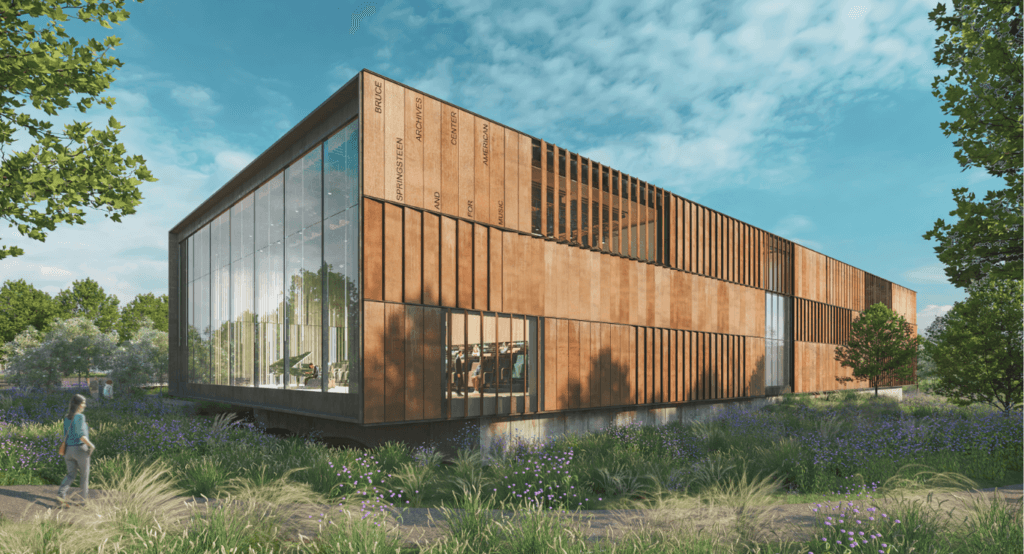
Following the 2017 announcement, the University began planning to expand the Archives’ staff and reach. The COVID-19 pandemic slowed efforts in a number of ways, but I joined as Curator in 2023, alongside Programs Manager Jeri Houseworth and Operations Manager Annalaan LeMay. That same year, Monmouth announced plans for a new 30,000-square-foot BSACAM building—designed by COOKFOX Architects and set to open in late spring 2026—with exhibition galleries, research space, and a roughly 250-seat soundstage.
Even before breaking ground, though, the Archives had developed a robust schedule of exhibits and programs. While still a full-time faculty member here at Monmouth, I had co-curated the BSACAM’s first traveling exhibition, Springsteen: His Hometown, with the Monmouth County Historical Association in 2019. Since then, we’ve curated shows at institutions such as the Folk Americana Roots Hall of Fame in Boston, the GRAMMY Museum Experience in Newark, and the Woody Guthrie Center in Tulsa. Our most ambitious project to date, Music America: Iconic Objects from America’s Music History, debuted at the LBJ Presidential Library in 2024 and continues to tour nationally. Featuring over 100 artifacts from institutions like the Rock & Roll Hall of Fame and the New Orleans Jazz Museum, the exhibit uses music to explore themes of class, race, gender, and democracy across 250 years of American history.
Building Community Through Music
While awaiting our new building, BSACAM has become a vital cultural hub for New Jersey. We’ve partnered with organizations such as the New Jersey Historical Commission, the New Jersey Council for the Humanities, and Revolution NJ; hosted Preservation NJ’s annual meeting; and launched teacher-training workshops and student programs with New Jersey History Day.
Our signature public events now include American Music Honors, an annual celebration recognizing artists such as Jackson Browne, Mavis Staples, Smokey Robinson, and John Mellencamp; and Move On Up: A Gospel Sing-Off, which honors gospel choirs from across the state. Additional offerings—like Tuesday Night Record Club, Hip Hop in the Round, Conversations with our Curator, and Women’s History Month events—connect audiences of all ages to American music heritage.
Looking Ahead
Busy though we have been, when our new facility opens in 2026, it will transform how we engage with visitors. The soundstage will host concerts, films, lectures, and educational programs. We’ll offer curriculum-aligned class trips, more traveling exhibits, mentorship programs, and more.
For those unable to visit in person, virtual programs and digital exhibits will continue to extend our reach nationwide. And, of course, the Bruce Springsteen Archives will continue to grow—preserving Bruce’s personal notebooks, lyrics, letters, recordings, and photographs for scholars and fans around the world.
Today, the Bruce Springsteen Archives & Center for American Music stands as far more than a repository. It is a living, research-driven cultural center dedicated to preserving Springsteen’s legacy while celebrating the full story of American music. Through its exhibitions, programs, and partnerships, BSACAM embodies the spirit of creativity, community, and storytelling that defines both Bruce Springsteen and the nation his music reflects.
This blog is a shortened version of a chapter in our forthcoming book, Ties That Bind: Iconic Objects from the Collection of the Bruce Springsteen Archives & Center for American Music at Monmouth University.
Melissa Ziobro
Director of Curatorial Affairs
Bruce Springsteen Archives & Center for American Music
Monmouth University
October 26, 2025